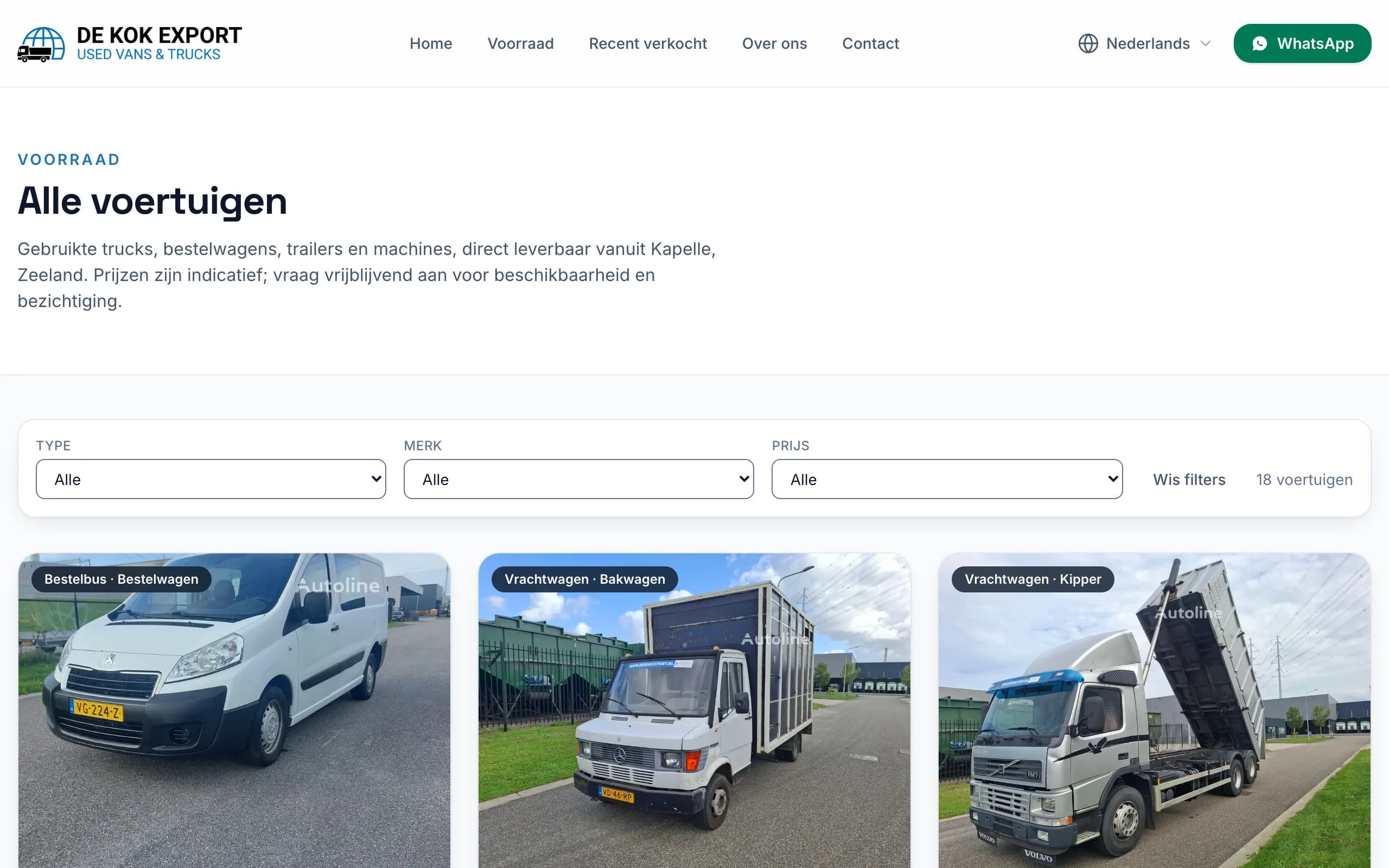
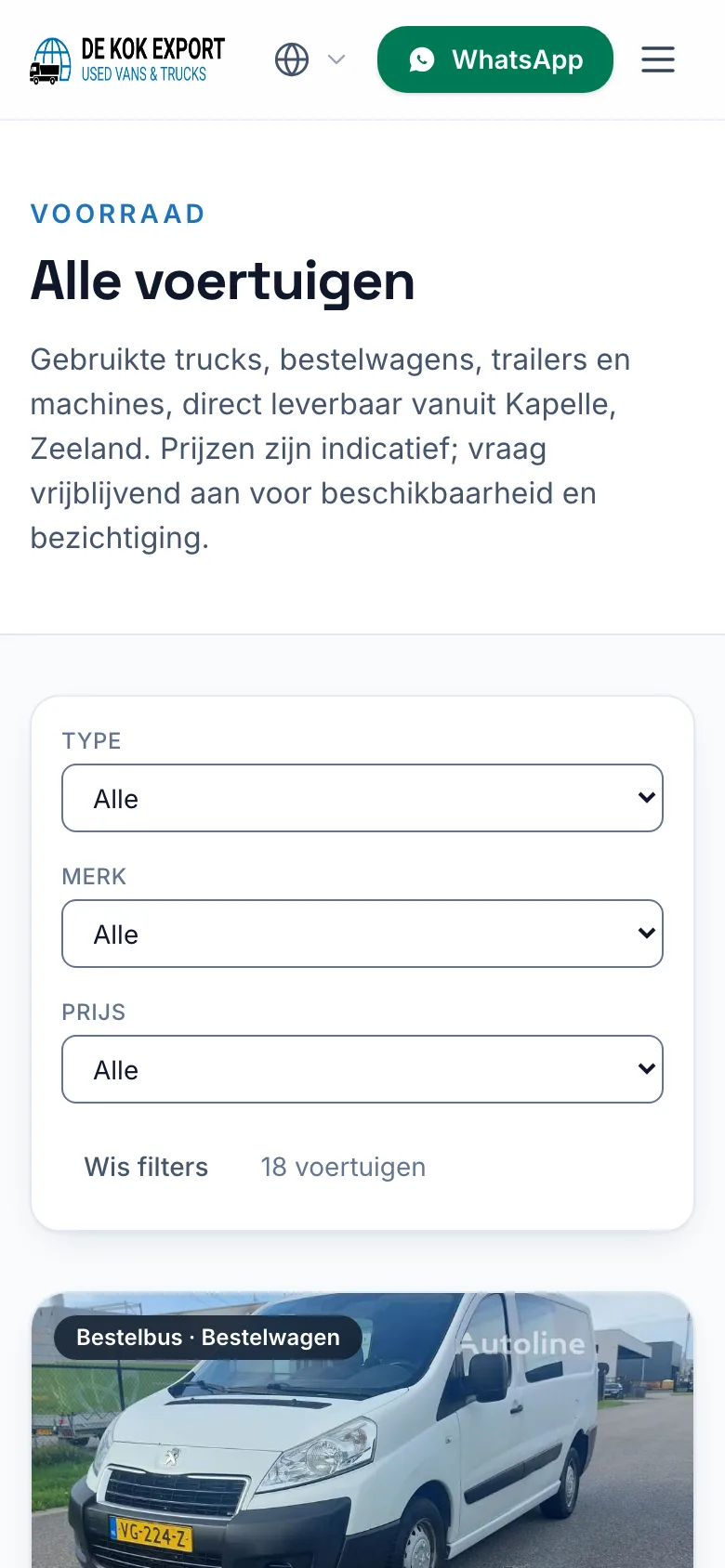
The whole stock, with filters
Every vehicle on one page, filtered by type, make and price, with the count beside it. Each vehicle carries its kind as a label, so a visitor looking for a tipper does not have to page through vans.

Reference · Website and integration
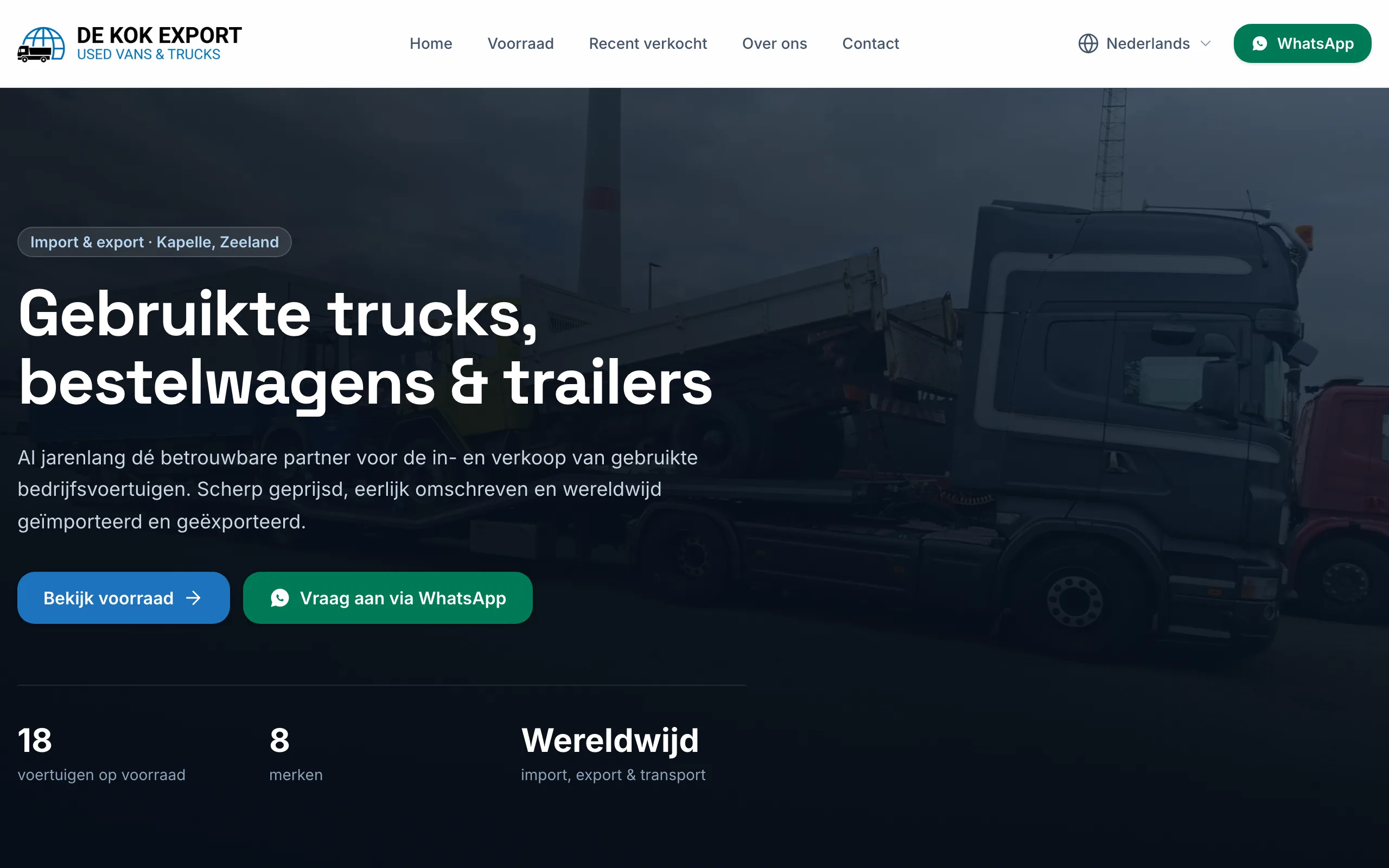
De Kok Export trades used trucks, vans, trailers and machines from Kapelle in the Netherlands, worldwide. The stock is kept by hand on their own Autoline page. I built the website around it: every hour a feed takes that stock across, and the site rebuilds itself. Nothing is entered twice.
De Kok's stock sits on their own dealer page on Autoline, the marketplace where buyers are looking anyway. Every vehicle is entered there by hand, with its photos and details. That is the source, and it had to stay that way.
The old site ran on WooCommerce and was kept separately: every vehicle went in twice, and whatever had sold on Autoline stayed on the site until somebody remembered. A site of their own took its place, built around the way De Kok works: one place to enter things, prices on request, and a WhatsApp button instead of a shopping cart.
A site that is mostly looked at on a phone, with the stock at its heart.
Every vehicle on one page, filtered by type, make and price, with the count beside it. Each vehicle carries its kind as a label, so a visitor looking for a tipper does not have to page through vans.
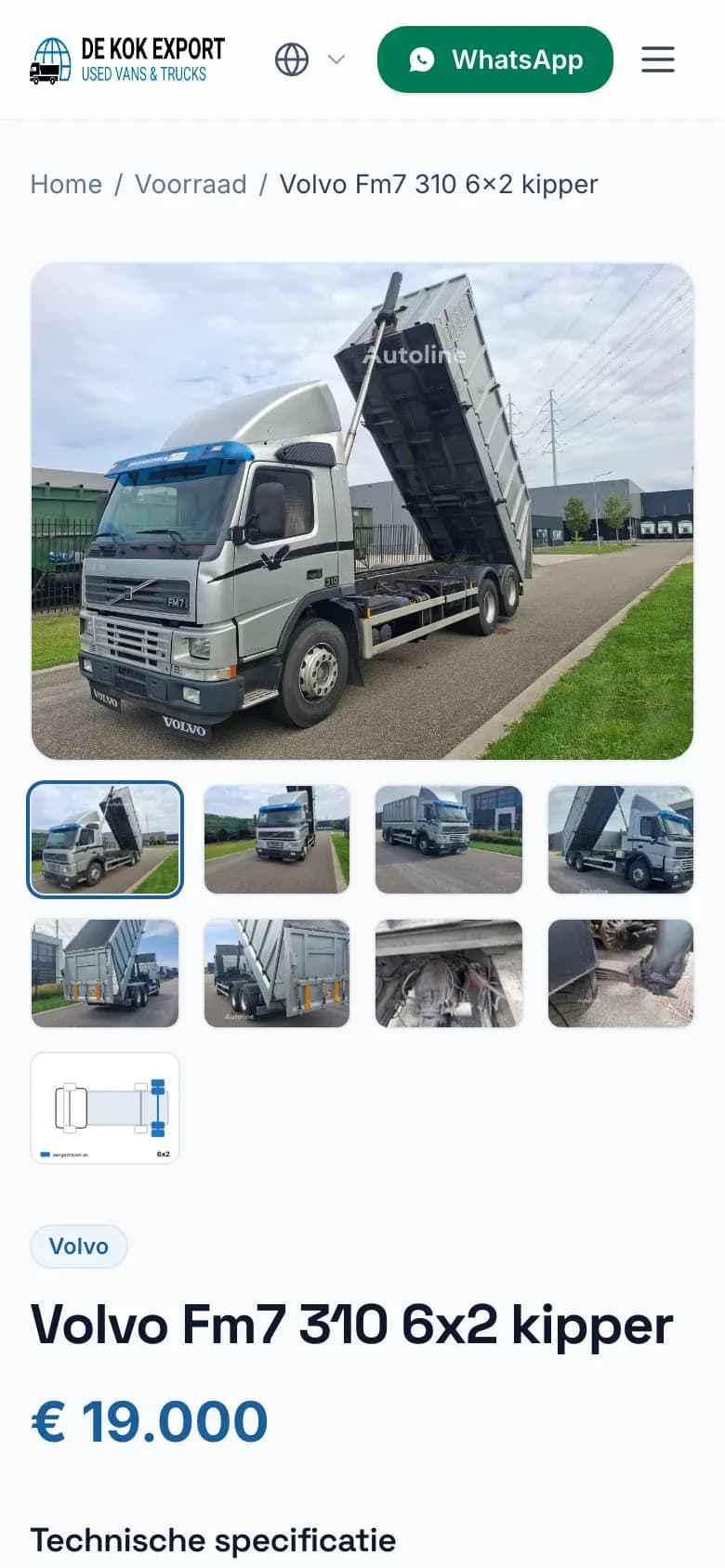
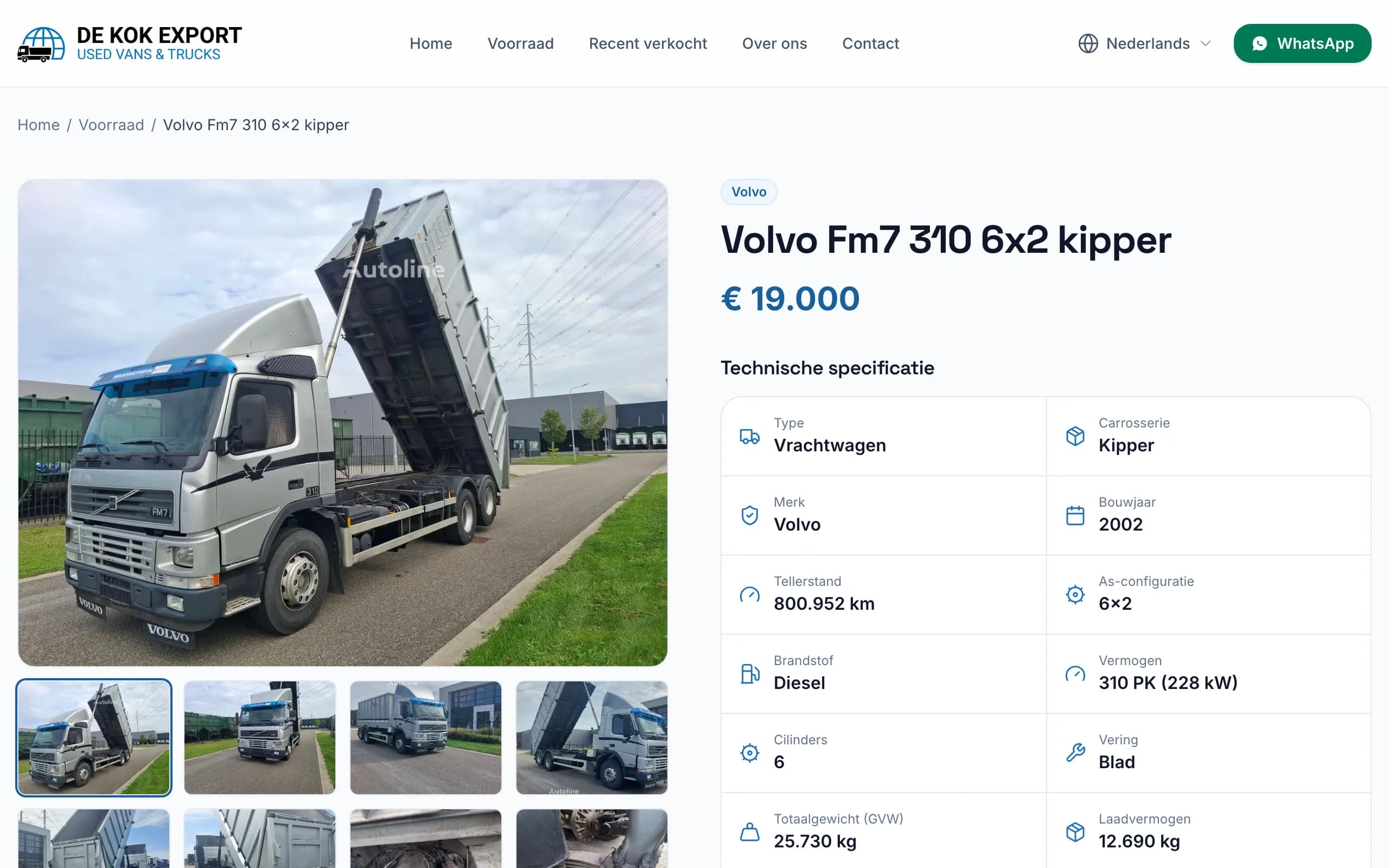
Every photo from the advert, the details De Kok enters, and the buttons to get in touch below them. No price on the pages where it is not fixed: those say price on request.
Most buyers look on a phone, often on a poor connection. The pages are static and light, the photos are delivered at the size they are shown, and the filters work just as well with a thumb.
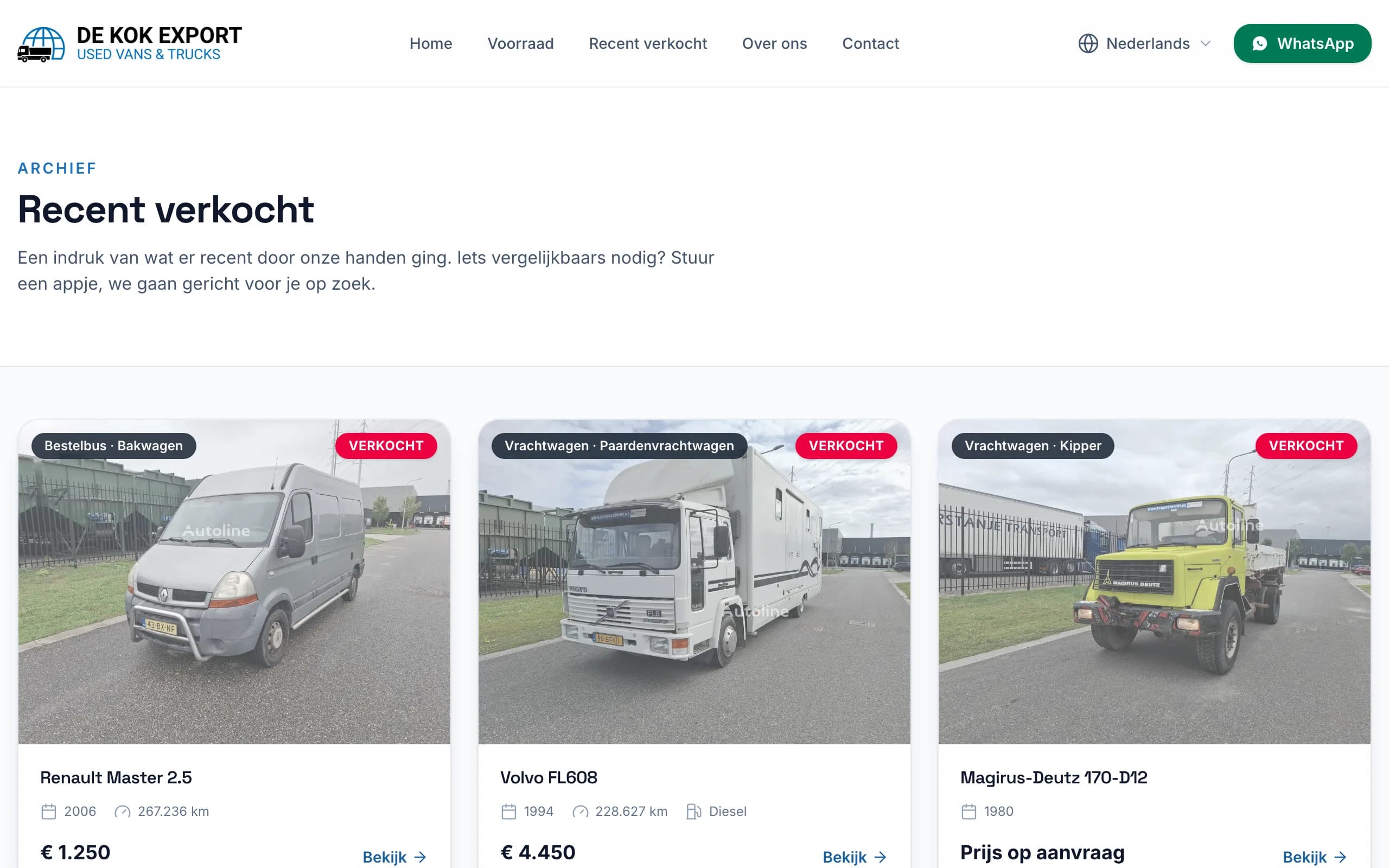
What leaves Autoline does not vanish from the site; it moves to Recently sold. That shows what goes through the yard, and a buyer sees straight away what kind of work De Kok does.
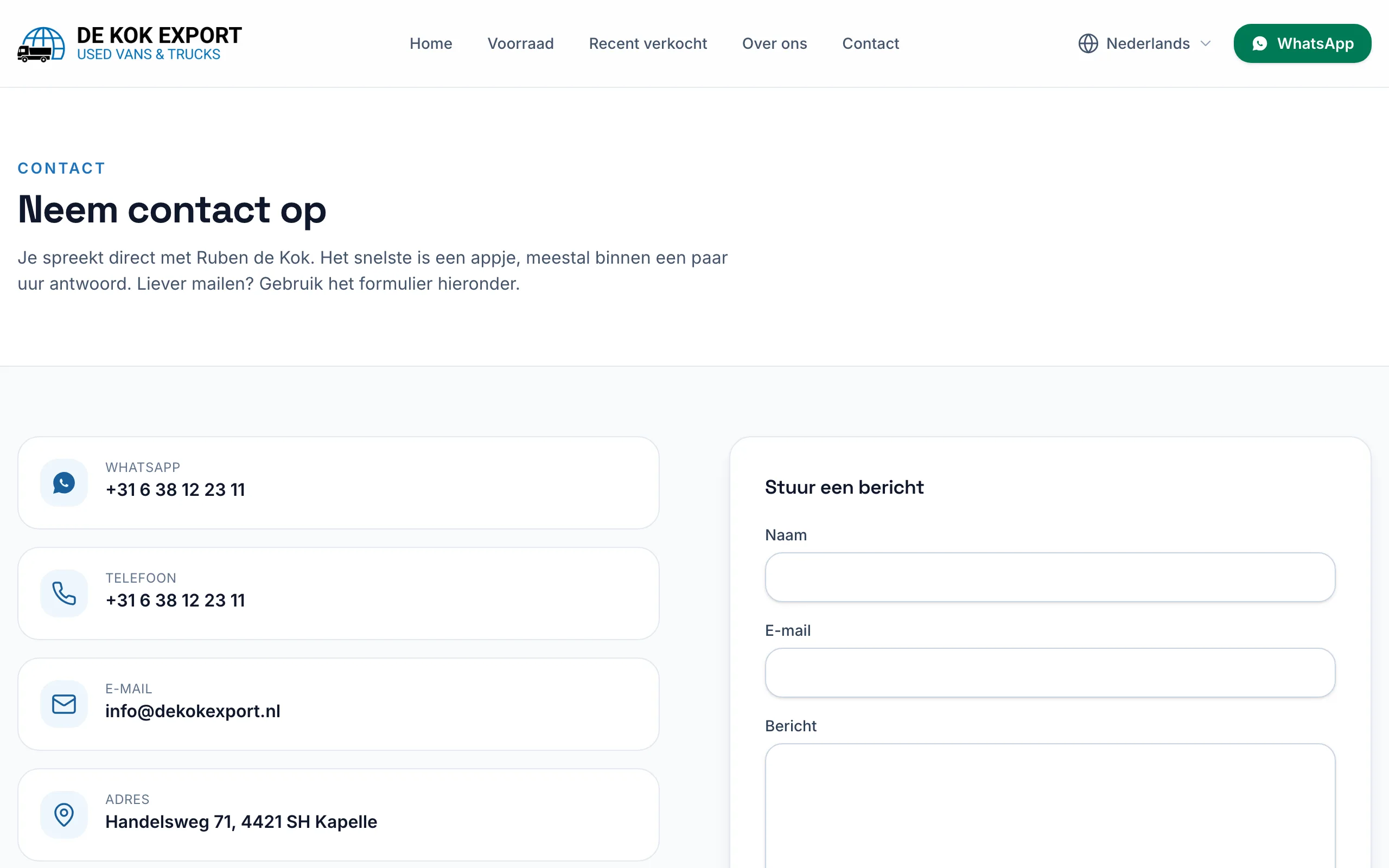
WhatsApp, phone and e-mail come first, with a form beside them that goes straight to the inbox. If the key for that form service ever falls away, the phone number and the e-mail address simply stay.
Four steps, every hour, without anyone having to do anything.
De Kok puts a vehicle on their Autoline page, with photos and details. Nothing changes about how they do that; that was the condition.
A small service reads that page every hour and records the adverts, photos and details in the content system behind the site. It only writes when something really changed.
A change in the content system sets the site building. Visitors then get finished pages: nothing is fetched while they are looking.
Whatever leaves Autoline gets the sold mark; the feed never deletes. Vehicles added by hand are left alone. And if it reads half a listing, a brake kicks in: better to skip an hour than to empty the stock. The status page stays red until it adds up.
The site runs under a hosting, management and maintenance agreement. This is part of it.
The full content, photos included, goes to encrypted storage somewhere else every night. That backup runs on a machine of my own, not on bought build minutes.
Only a successful backup checks in. If that check-in fails to arrive, I am notified automatically. It works: when the machine dropped out for a night, the message was there the next morning.
Putting back vehicles that were deleted by accident, or in the worst case the whole state of a given day, is written out step by step. A backup you have never restored is not a backup.
Every key lives in a password vault and is pushed from there to the hosting environment. The source code holds only the names of the fields, never the values.
The visitor statistics are cookie-free. The translation button loads nothing from outside until the visitor picks a language themselves; until then there is no third-party code on the page.
You do not buy a truck with a shopping cart. The site shows the price or says price on request, and lets the conversation start where it starts anyway: on WhatsApp or on the phone.
The stock on the site is in step with Autoline within the hour, without anything being entered twice. Sold vehicles leave the stock by themselves and stay visible under Recently sold.
De Kok enters their stock the way they always did. The site, the feed, the backups and the maintenance are mine; and if something goes wrong on the Autoline side, the feed skips an hour instead of emptying the stock.
Static pages on a global network, with a content system beside them. Few moving parts, low fixed costs.
Tell me where your data comes from today. I will tell you honestly whether a feed pays for itself, or whether retyping is cheaper for now.